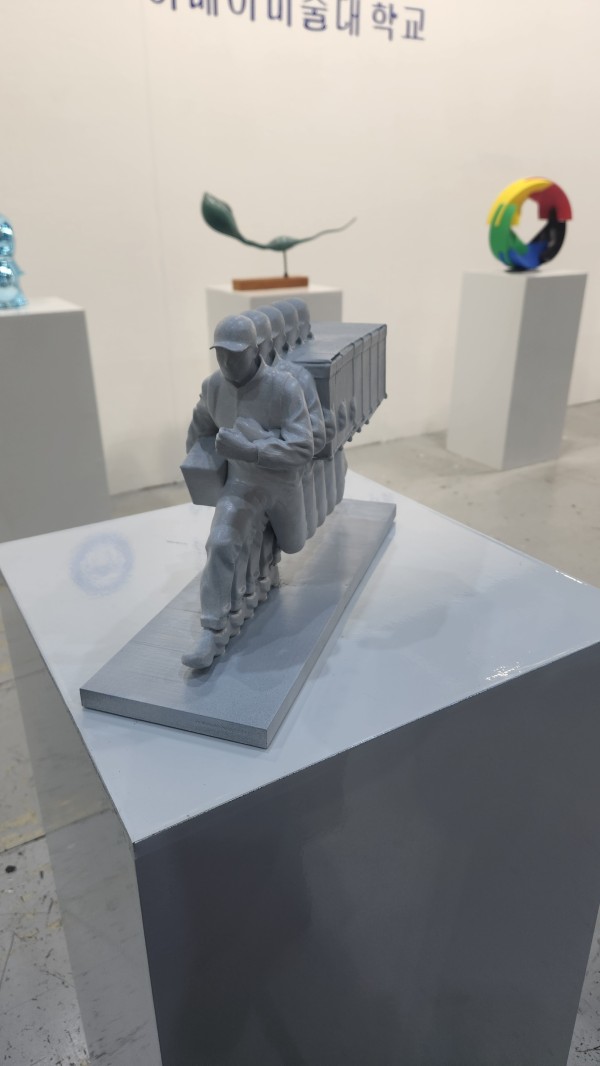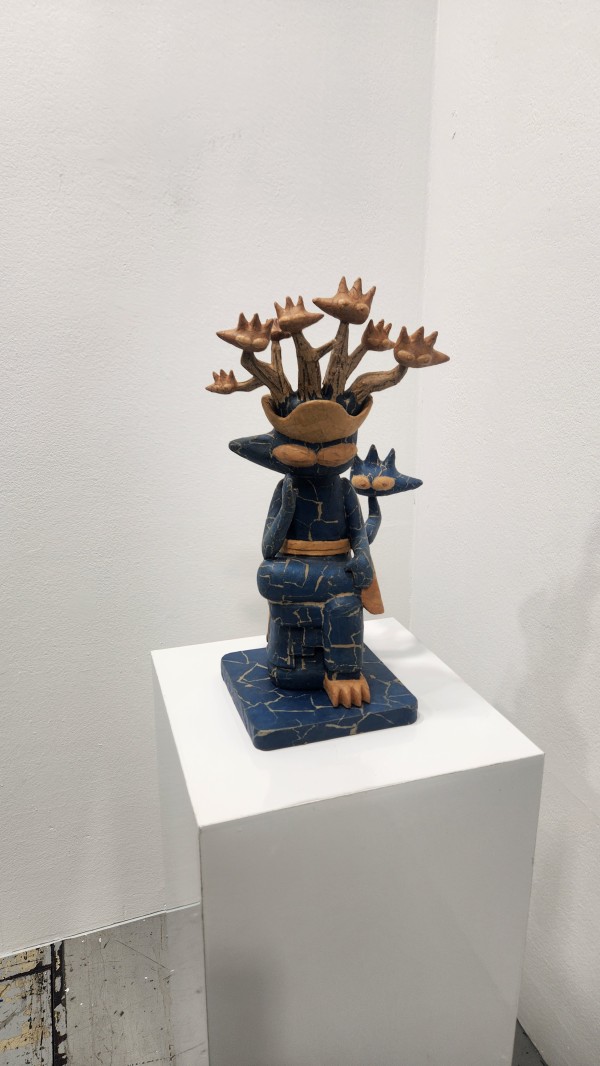
Pensive Bodhisattva
Kim Ju-young (Hebei University of Fine Arts)
Contemplation and Reflection
Resin with recycled cardboard
28 × 30 × 53 cm
Hebei University of Fine Arts drew significant attention by participating for the first time in the Seoul International Sculpture Festa, held at COEX from the 14th through the 18th.
The university presented a compelling overview of Chinese sculpture education while engaging with the currents of contemporary art.
A total of 15 faculty members took part in the exhibition, six of whom traveled to Seoul in person.
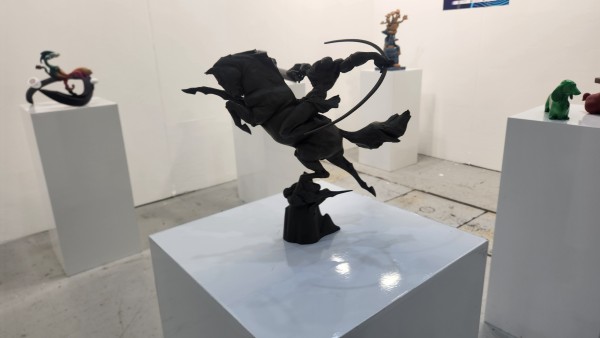
With the exception of one Korean professor, all participating artists were Chinese nationals, making the scale of this institutional-level international exchange particularly noteworthy.
Media Shovel (shovell.io ) conducted an interview with Professor Kim Ju-young, a Korean professor and practicing artist at Hebei University of Fine Arts.
she explained that while the university’s sculptural education is grounded in traditional practices, it is especially recognized for its high level of technical mastery in figurative sculpture.
According to Professor Kim, Chinese sculpture continues to value tradition and figuration, yet it is steadily evolving toward works that embed contemporary reflection rather than mere representation.
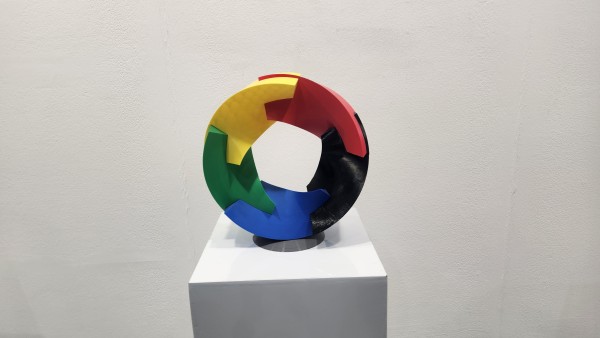
Among the exhibited pieces was a modern reinterpretation of the Buddhist Pensive Bodhisattva, which the artist described not simply as a religious form, but as something closer to a self-portrait.
Professor Kim noted that sculptors condense the questions accumulated through their lives and reflections into a single form.
While each artist’s experiences differ, the artwork ultimately converges into a unified image.
The exhibition also highlighted innovative approaches to materials.
Some works were created using recycled cardboard instead of stone or metal.
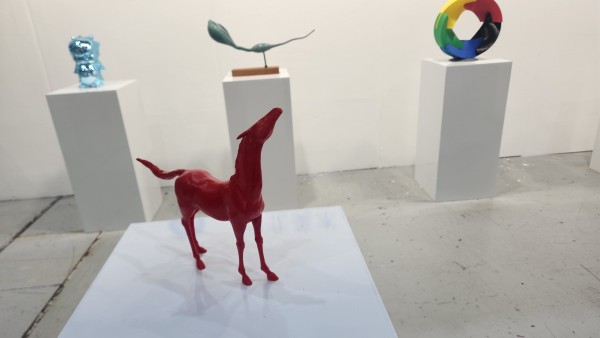
This choice stemmed from an understanding of material circulation—from tree to paper and eventually back to earth—as a metaphor for the human life cycle.
Such works demonstrate an attitude that views materiality not merely as substance, but as a process of thought.
The interview also addressed concerns surrounding AI and digital technologies.
Professor Kim acknowledged that 3D modeling and printing have become essential tools in sculpture, but emphasized that the tactile sensibility and labor of the human hand are becoming even more valuable in response.
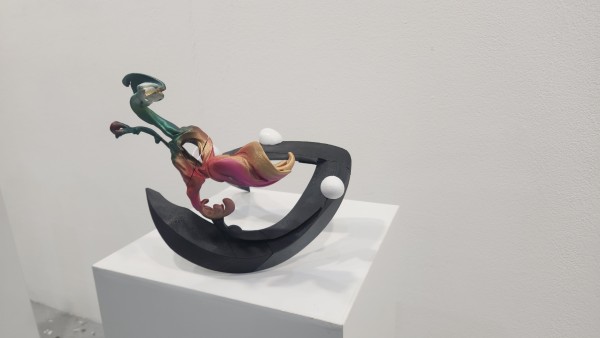
she stressed that sculpture remains one of the most fundamentally human art forms.
Regarding education, she explained that the program avoids imposing specific materials or styles.
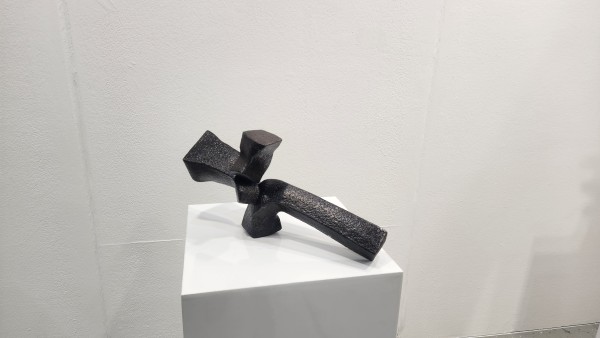
Students are encouraged to experiment broadly—ranging from stone, wood, metal, and clay to 3D modeling and video—before choosing the medium that best suits their individual themes.
On the role of public art, Professor Kim described it as a “butterfly effect”: not essential to survival, but capable of subtly transforming environments and perceptions.
Events such as sculpture festivals, she added, help alleviate artists’ isolation and serve as important bridges between art and the public.
Finally, commenting on the Korean art market, Professor Kim observed that the abundance of art fairs reflects strong public interest and cultural maturity.
she noted that China is increasingly looking to Korea as a model while seeking connections between tradition and contemporary art.
The university’s participation in this year’s festa, she concluded, represents more than a single exhibition—it marks a starting point for deeper mutual exchange and expansion between Korean and Chinese sculptural cultures.