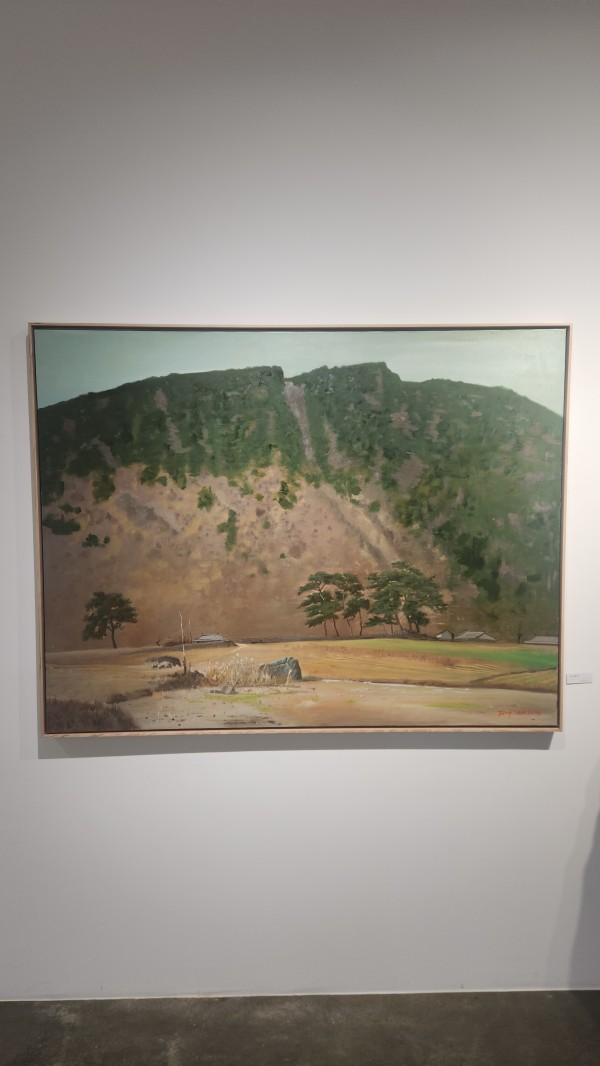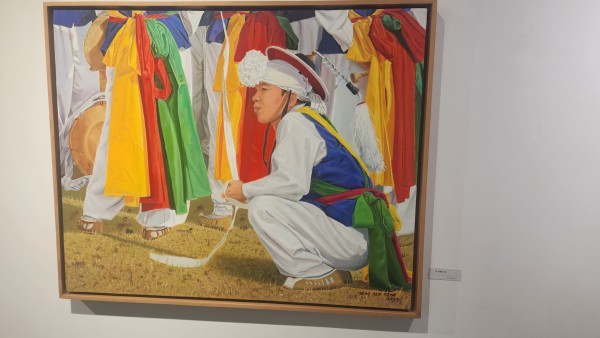
From October 29 to November 3, Maru Art Center’s Gallery GB in Insadong (Insadong-gil 35-6, Seoul) hosted a solo exhibition by painter Jang Hak-Sang, offering viewers a deeply nostalgic encounter with the everyday Korean landscape.
The exhibition brought together a wide range of his long-standing artistic explorations—from pastoral scenery to traditional cultural motifs—revealing the painter’s enduring commitment to capturing Korea’s lyrical, rural sensibilities.
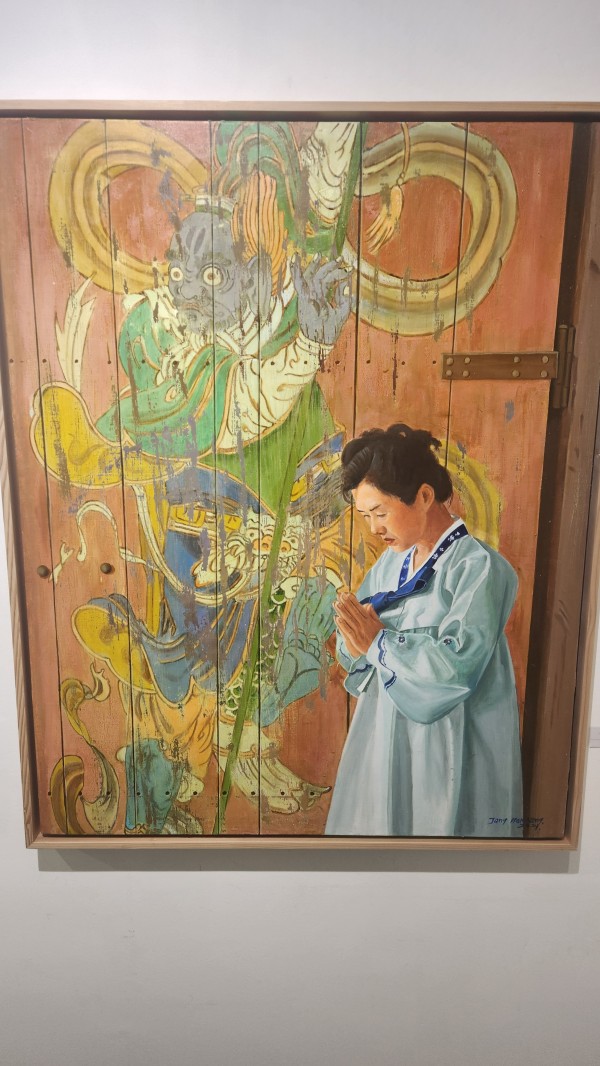
Jang explains that his work begins with the simplest of encounters: grass underfoot, flowers at the roadside, familiar faces of everyday life.
These are moments that tend to slip past unnoticed, yet he seeks to revisit them, transforming them into images that preserve the modest joys and emotional hues of Korean daily life.
While his paintings may at first resemble unassuming fragments of countryside life, Jang strives to uncover the quiet significance embedded in these ordinary scenes.
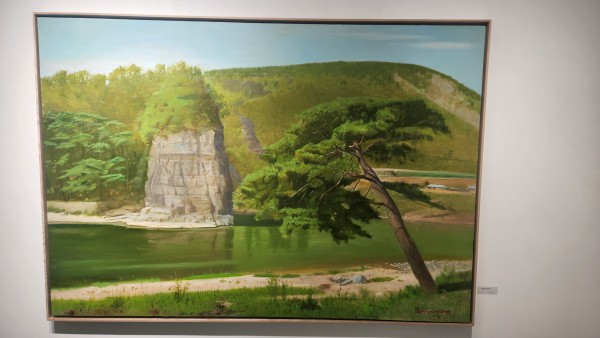
His canvases are marked by a soft, melodic surface quality, evoking the lingering resonance of a gentle tune.
Through light brushwork and restrained color, he infuses his work with the emotional atmosphere of nature and his rural upbringing.
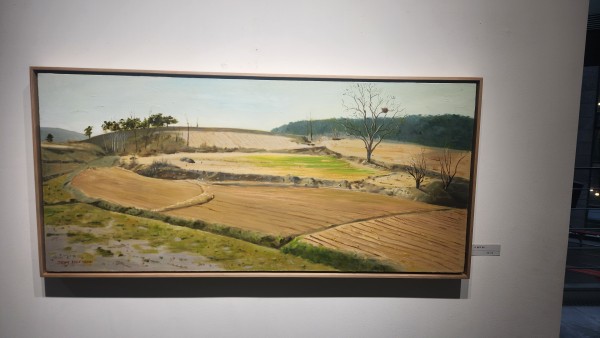
Jang’s technique is both meticulous and meditative.
He spreads oil paint thinly across the canvas, establishing the composition before layering color—usually in three passes.
In the final stage, he uses a finer brush to add subtle expressions or highlights, breathing life into the imagery.
The resulting works feel warm rather than rugged, stirring viewers’ memories and emotional responses. Figures such as a woman in a hanbok holding a parasol recall the villagers he encountered during his childhood.
Winding country paths, farmhouses untouched by development, and serene mountain landscapes evoke a Korea that once was—raw, unaltered, and deeply rooted in nature.
Scenes of remote mountain villages in late autumn conjure the quiet resilience of rural life. Jang’s journey as an artist began early; he enjoyed drawing as a child and became fully captivated by art during middle school.
After graduating from a teacher’s college with a degree in art education, he spent more than two decades teaching before taking early retirement to dedicate himself entirely to painting. For Jang, art was never about livelihood—it was always the truest way to express his inner world.
Recurring motifs in his work include farming scenes, outdoor performances, rice fields, and remote villages. Discussing traditional “nongak,” he describes it as “a cultural expression born from hard labor, a communal form of play that helped people endure hardship together.”
These memories of rural community life form a significant foundation of his artistic universe.
Though grounded in figurative painting, his work often moves toward semi-abstraction, featuring luminous, layered color.
Despite working in oil, his surfaces sometimes resemble the clarity and softness of ink wash, earning frequent comparison to traditional Korean aesthetics.
Jang notes that oil painting requires patience and time, adding: “Artistic skill grows step by step. You have to keep observing, drawing, and looking again.”
When asked about the rising global interest in K-culture, he emphasized the importance of continuity in tradition, speaking warmly of the richness and originality of Korean aesthetics. Korea’s mountainous, varied terrain, he explains, nurtures a landscape unlike any other.
Jang believes that art serves as “a passage to another world”—a bridge through which viewers encounter the artist’s inner realm and simultaneously discover their own narratives and emotions.
As for choosing Insadong as the venue, he stated, “Insadong is the symbolic heart of Korean art,” praising its cultural depth and historical connection to traditional artistic practice.
Through this exhibition, Jang Hak-Sang invites viewers into a tranquil and deeply personal interpretation of Korean rural life—an artistic space where memory, sentiment, and everyday beauty quietly converge.