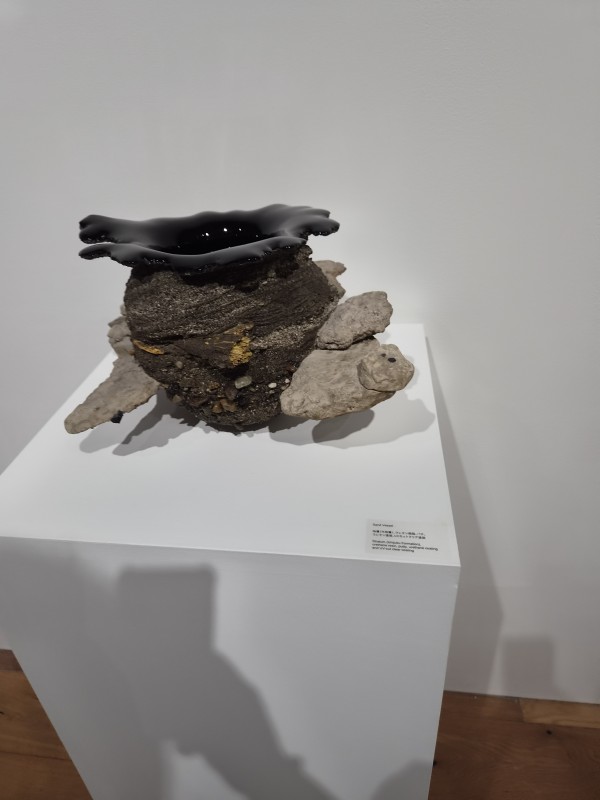
LURF GALLERY(https://lurfgallery.com/ ) is pleased to present Out of Bounds, a solo exhibition by Teppei Miyake featured on the gallery’s first floor from 3 July through 3 August 2026.
Miyake’s practice investigates the invisible layers of time and history that underpin our daily lives, examining them through cross-sections of geology and minerals embedded within the earth.
For this exhibition, the artist explores the intersection of human activity and expansive natural timelines by focusing on two specific sites: the coal seams of Iizuka City in Fukuoka Prefecture and the mountain sand strata of central Chiba Prefecture.
Coal, formed from plant matter over tens of millions of years, served as a foundational energy resource for Japan’s modernization.
Conversely, the extraction of Chiba’s mountain sand has fueled urban development in the Tokyo metropolitan area while radically altering the physical landscape.

By tracing the history carried within these raw materials, Miyake exposes the profound overlap of time and terrain beneath our feet.
The title Out of Bounds reflects a deliberate effort to engage with what lies beyond the boundaries of our immediate awareness, offering new insights into the forgotten histories and distant temporalities that surround us in an information-saturated world.
Miyake’s exploration of geological strata originally emerged from his work designing gravestones.
In Japan, funerary traditions rooted in the Edo-period temple guild system have long provided the framework for remembering the deceased.
However, shifting religious perspectives, growing individualism, and demographic declines prompted Miyake to reconsider how absence is expressed in contemporary culture.
While creating gravestones, he encountered the inevitable reality of oblivion—the fact that countless lives remain buried and unremembered, a fate that awaits nearly all of us.
Drilling into geological strata became his way of confirming the presence of these forgotten lives and establishing an attitude toward the vast, unseen weight of history.
This practice led Miyake to engage with the concept of "deep time," famously conceptualized by James Hutton in 1788 upon observing the angular unconformity at Siccar Point.
Deep time represents a geological horizon far beyond human memory, functioning as an unrememberable external dimension.
Yet, every grain of sand within a geological layer carries its own unique history.
While humans often perceive strata as finished products, deep time reveals them as ongoing processes; weathering becomes a form of creation, and oblivion is reframed as transformation.
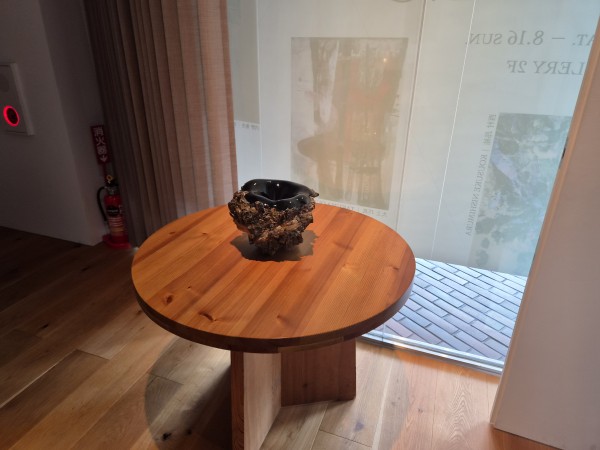
Just as the calcium in our bones was once drifting foraminifera and the iron in our blood originated from exploding stars, human existence is literally built upon deep time.
Miyake suggests that the beauty and subtle solace found in geological layers stem from a momentary connection to a vast temporal scale where the concept of loss does not even exist, reminding us that whenever we dig into the earth beneath our feet, the past remains undeniably present.