ENRICO EMBROLI
American contemporary artist Enrico Embroli may still be an unfamiliar name within the Korean art scene, but in the context of Western art history, he is a painter of undeniable weight and depth.
An in-depth interview with Lee Hong-nam, curator of Paul Lee Gallery, who has introduced Embroli’s work to Korea and personally collected his paintings, moved beyond a simple artist profile. The conversation unfolded into a broader reflection on the direction Korean contemporary art should pursue today.
The interview between Shovel and Lee Hong-nam took place on December 24, Christmas Eve, at COEX, and explored Embroli’s painterly world alongside the structural limitations of the Korean art market and the deeper meaning of “collecting” as a long-term, relational practice.
An Artist Recognized by Leo Castelli
Enrico Embroli is known as one of the artists strongly endorsed by the legendary gallerist Leo Castelli, a pivotal figure in 20th-century contemporary art.
Castelli famously supported and nurtured artists such as Jasper Johns, Roy Lichtenstein, Robert Rauschenberg, Andy Warhol, Jean-Michel Basquiat, and Jeff Koons, shaping the course of postwar art history.
“Without understanding Leo Castelli, one cannot truly discuss modern art history,” Lee Hong-nam stated. “Embroli chose the path of an educator and an artist rather than pursuing commercial success.”
Indeed, Embroli spent years teaching art in New York and reportedly declined multiple offers from commercial galleries, prioritizing artistic integrity over market visibility.
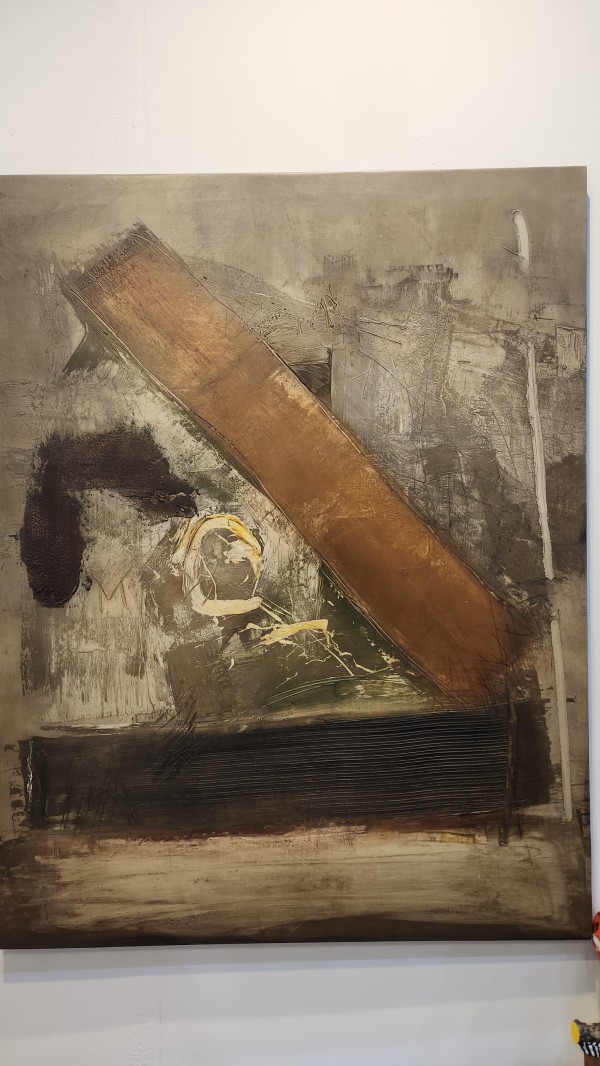
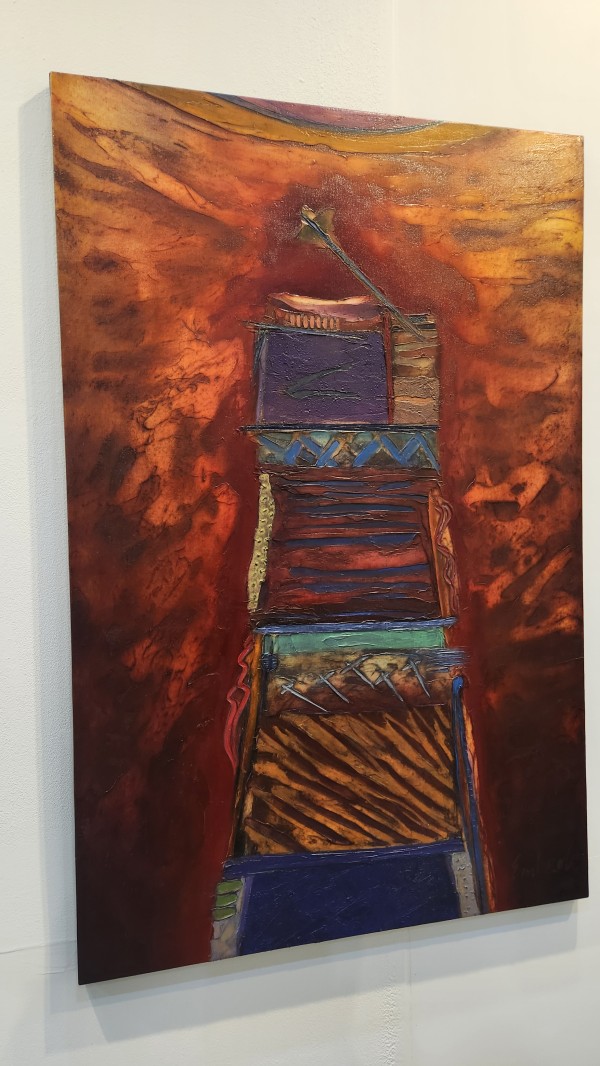
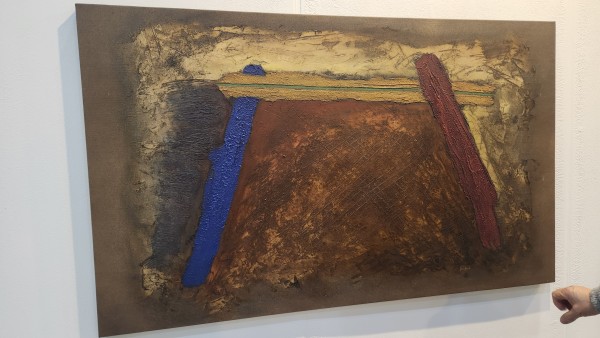
The defining characteristic of Embroli’s work lies in his profound understanding of material.
His paintings often appear close to monochrome, yet they contain a density and physical depth that feel as though decades of time have been compressed into a single surface.
“Korean artists often begin with composition or imagery,” Lee explained. “Embroli, however, begins by fully understanding the nature and behavior of his materials. The colors he creates are not mere mixtures—they are the colors of the soul.”
Despite being oil paintings, Embroli’s works avoid excessive gloss or heaviness. Instead, they present a restrained and disciplined surface—an approach that reflects his parallel engagement with both painting and sculpture.
“A Work Must Be Observed for at Least 20 Years”
Throughout the interview, Lee repeatedly emphasized the importance of time.
“A work should be held for at least twenty years,” he said. “Color changes, materials evolve. Only works that endure those changes truly survive.”
He drew a clear line against viewing art through the lens of short-term investment.
“When people ask, ‘Will this painting make money?’ I don’t even show them the work. Collecting is about relationships, trust, and time.”
His reason for collecting Embroli’s work for nearly a decade, he added, was simple: not price, but genuine belief in the work itself.
The conversation naturally expanded to the realities of the Korean art scene. Lee pointed out that many Korean artists chase trends too quickly.
“When you follow trends too fast, they fade just as quickly.”
For Korean art to mature further, he identified three essential conditions:
“Just as K-pop became global, artists themselves must become global in their mindset. Success that only works within Korea does not last.”
Speaking about his relationship with Embroli, Lee emphasized that collecting begins with understanding the person before the artwork.
Spending several days together at Embroli’s studio—sharing meals and conversations—deepened his understanding of the work beyond the canvas.
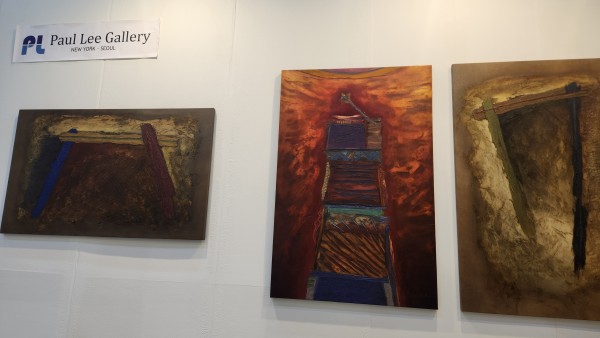
“People come first,” he said. “Art is the condensation of a person’s life and attitude.”
Through Embroli’s work, Lee Hong-nam delivers a clear message:
art is not about speed, but time;
not about trends, but accumulation;
not about transactions, but relationships.
This interview goes beyond introducing a single international artist. It leaves behind a quiet yet profound question—one that Korean art must now ask itself.