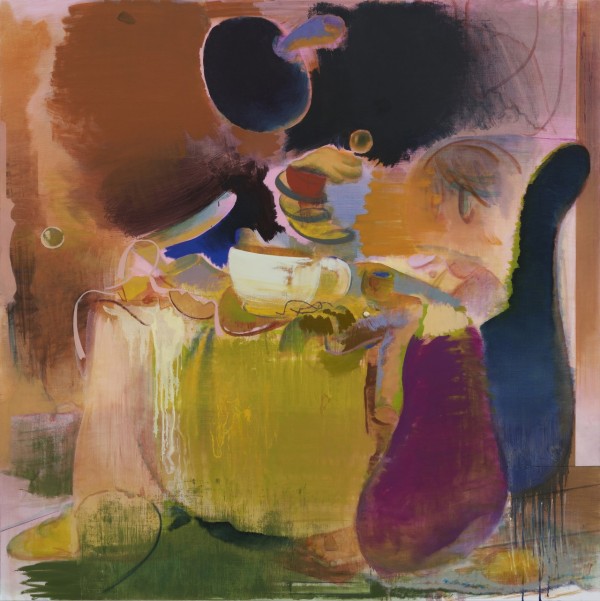
Song Seungeun, Blueberry Black Hole, 2025, oil on canvas, 140 × 140 cm
Noon Contemporary will host a solo exhibition by Song Seungeun titled The Weight of Softness Held in My Arms, running from November 28 through December 28, 2025, at its space in Yongsan, Seoul.
The exhibition focuses on the physical sensations of heaviness and gentleness as they surface within painting, paying particular attention to the subtle pulses, tensions, and rhythms that arise between these contrasting qualities.
Rather than constructing a coherent narrative, the works present themselves as momentary occurrences in which different temporal layers and sensory impressions briefly intersect.
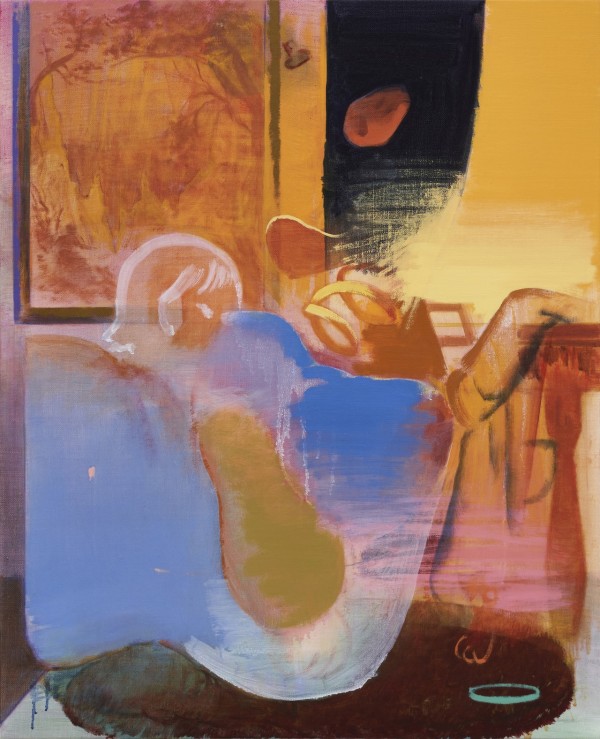
Song Seungeun, An Arm Settling at Dusk, 2025, oil on canvas, 65.1 × 53 cm
Viewers are encouraged to encounter the paintings through their own bodily awareness, sensing how balance and strain emerge from moments that feel simultaneously weighted and tender.
Song Seungeun’s practice centers on the pursuit of faint sensory traces that linger after a scene has passed, leading her to investigate the space that opens between image and memory.
Instead of reproducing distinct or recognizable forms, she begins her work by intuitively navigating the sensory structures embedded within fragmented visual impressions, allowing these fragments to determine the trajectory of each painting.
The elements within her compositions do not resolve into a unified storyline but remain loosely connected, intersecting gently while sustaining their own independent rhythms.
These scenes resist full comprehension, and it is precisely this incompleteness that allows the paintings to reveal their pauses, breathing spaces, and internal tempo.
Within Song’s canvases, heaviness and softness coexist, producing surfaces that appear quiet yet contain an underlying pressure through which subtle emotional textures gradually unfold.
She understands painting not as a vehicle for fixed meaning but as an ongoing process in which sensations gather, shift, and destabilize, continually occupying the threshold between remembered experience and present perception.
Born in 1991, Song Seungeun earned her bachelor’s degree in painting from Hongik University and completed her master’s coursework at the same institution.
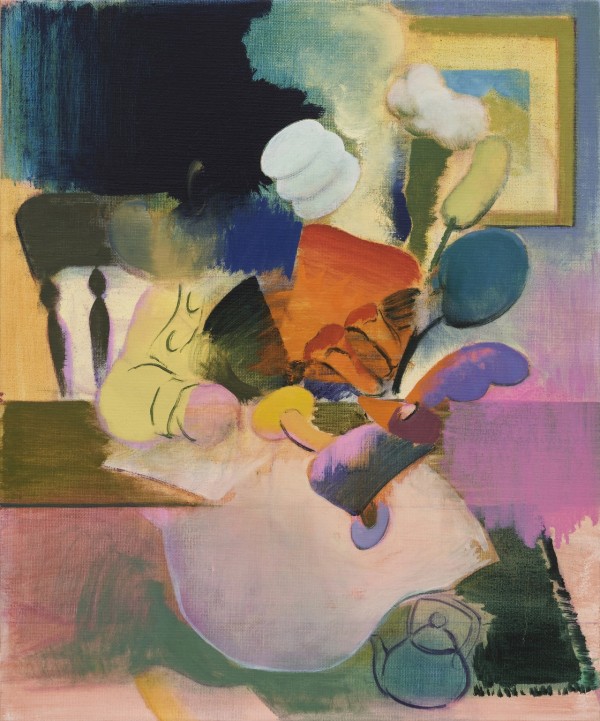
Song Seungeun, Planta, 2025, oil on canvas, 45.5 × 37.9 cm
Her recent solo exhibitions include The Weight of Softness Held in My Arms at Noon Contemporary in Seoul in 2025, Planta at Giche in Seoul in 2025, The Slipped Teacup at Artside Gallery in Seoul in 2022, and Grab the Slush at Keep in Touch Seoul in 2020.
She has participated in numerous group exhibitions, including Dust in the Basement at Ilwoo Space in 2025, If We Were to Remember Everything at Giche in 2024, Multiple Ways of Seeing at the Kumho Museum of Art in 2023, Today, Moment, Emotion at Artside Gallery in 2021, BGA Showroom at BGA Maru in 2021, and A Planet Filled with Empty Spaces at Hapjeong District in 2018.
Song has received support from the Seoul Foundation for Arts and Culture through its artist grant programs in 2022 and 2025, as well as from the RE:SEARCH Arts Support Program in 2021 and the First Artist Support Program in 2017, and her work is included in the collection of the National Museum of Modern and Contemporary Art, Korea.
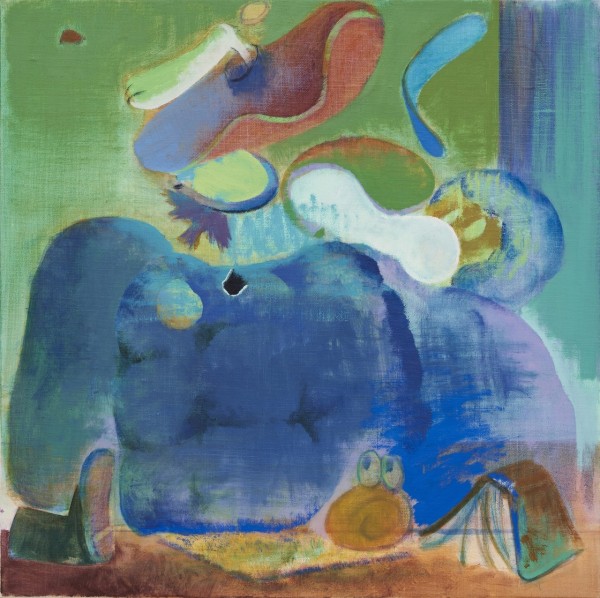
Song Seungeun, Sleep for Survival, 2025, oil on canvas, 45.5 × 45.5 cm
When encountering a scene, its temperature or texture often reaches us before any recognizable form.
Song Seungeun’s paintings originate precisely from this subtle tremor of sensation.
Rather than reconstructing a specific narrative, the elements within her canvases are arranged as overlapping fragments of disparate times and perceptions, gently layered rather than resolved.
Pieces of classical painting, scenes from novels, fragments of animation, and residual traces of personal memory are loosely woven together to form a momentary image, yet this image never advances toward closure.
Instead of fixing form, Song attends to the density of vibration produced as these elements linger, pass through, and dissolve.
Her paintings remain in motion, suspended within an unstable threshold rather than settling into definition.
The point of departure for her work is not a clear sentence or concept, but the afterimage left behind by sensation.
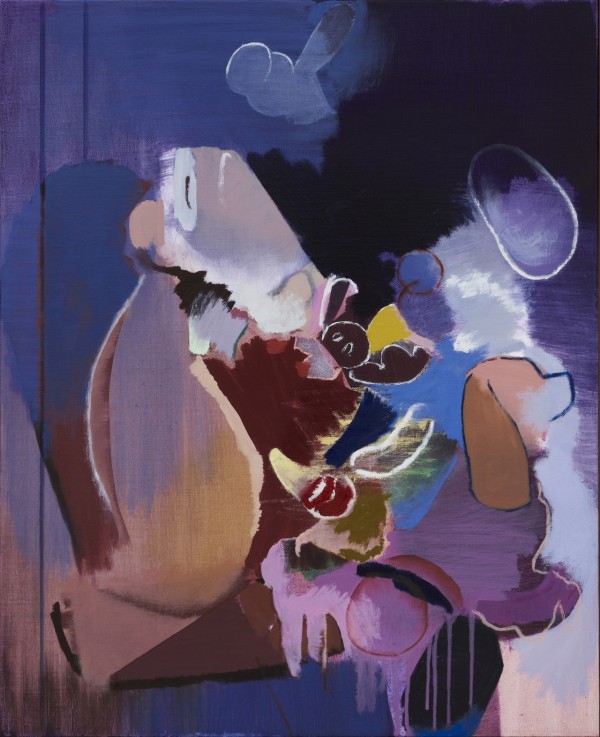
Song Seungeun, You Don’t Happen to Have a Piece of Cheese, Do You?, 2025, oil on canvas, 65.1 × 53 cm
In response to this trace, the artist gathers fragments of imagery across multiple registers and composes them into delicate collages. These collages exist as temporarily fixed planes, remaining deliberately flat. Song resists transferring them directly onto canvas, wary of allowing her work to be confined by the surface impressions or immediate narratives produced by collage.
Instead, she reconstructs these scenes through charcoal drawings, slowly tracing the latent structures and densities of light embedded within them.
Through the stark contrasts of black and white, charcoal reveals with precision the direction, weight, and diffusion of light across the surface.
What was once flat gains depth; boundaries where darkness seeps in and brightness expands begin to interlock, restoring a sense of breath to the image.
For Song, charcoal drawing is not preparatory but restorative—a process through which painting regains its respiration and fundamental rhythm by recalibrating the relationship between light and texture.
Building upon these drawings, she then layers oil paint onto canvas.
Color is not employed as a means of filling space but treated as a language that translates the residual sensations left by light.
The thickness of paint, the marks left by wiping and scraping, and the directional flow of brushstrokes accumulate into strata, giving the surface a density reminiscent of skin.
Song carefully prevents color from asserting dominance or overwhelming sensation; instead, she calibrates a coexistence in which color and light maintain a fragile equilibrium, sharing the surface through restrained, measured breathing.
This repetition does not follow a linear path toward completion but forms a cyclical process through which the structural logic of the image and that of sensation continuously negotiate with one another.
Within this cycle, the canvas ceases to function as a window onto the world and becomes a structure in which sensation temporarily resides.
In her recent works, Song further expands her engagement with materiality.
The grain of brushwork, semi-transparent traces left by rubbing with cloth, and incisions created through scratching accumulate as distinct layers of sensory thickness.
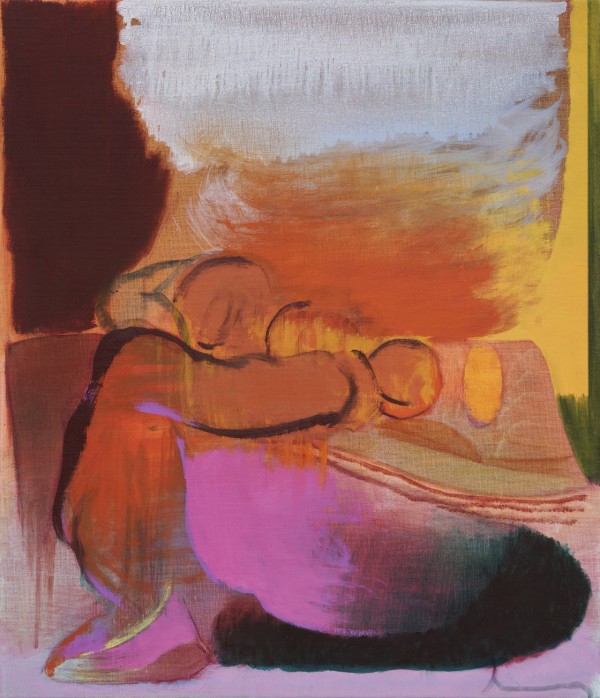
Song Seungeun, Sleeping Time, 2025, oil on canvas, 53 × 45.5 cm
These surface marks do not operate as expressive gestures but as rhythmic units of sensation. As planes and lines, textures and voids permeate one another, the surface generates a quiet yet ceaseless vibration, allowing the image to sink slowly before rising again, suspended in continuous motion.
The exhibition title My Heavy, Fluffy Arms encapsulates this sensory architecture with particular clarity. “Heaviness” here does not signify mere descent or inertia; it refers instead to a density formed through the accumulation of sensation, time, hesitation, and unfinished movement embedded within the structure of the work itself.
“Softness” describes the manner in which this weight is sustained and released.
The tactile quality suggested by “fluffy” extends beyond surface comfort, evoking a sensation closer to the air trapped within an old quilt—delicately trembling, slowly expanding, and loosening the boundaries of form. Song understands this duality not as opposition but as a singular mode of movement.
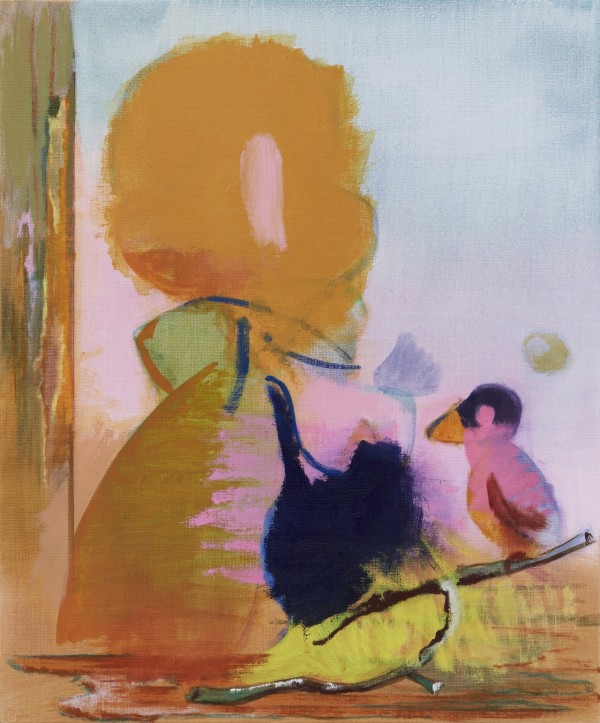
Song Seungeun, A Walk at Dusk, 2025, oil on canvas, 45.5 × 37.9 cm
A drooping arm, a foot hovering slightly above the ground, or a moment when the weight of a bed and the light of morning coexist—these opposing forces do not cancel each other out but instead generate a rebound, falling and lifting again like a bungee cord.
Within this oscillation, scenes exist not as resolved narratives but as sensory events, momentarily held at the intersection of heaviness and softness.
Throughout Song Seungeun’s work, objects, figures, and spaces do not converge into a unified storyline but drift independently along currents of sensation. Floating droplets, ambiguous masks or ghost-like figures, and birds resting in quiet isolation appear not to complete narratives but to create openings. These elements exist first as sensations rather than symbols, breathing like fragments of memory.
Scenes arriving from different directions entangle within the canvas, while temporal textures overlap to form a single, slow-moving image.
Memory here is not reproduced but retained as a sensory structure—never fully grasped, yet ordered through its very instability.
Ultimately, My Heavy, Fluffy Arms stands as a record of painterly vibration: of sensations pressed downward only to rise again, of the hand’s tempo as it moves from one scene to another, and of the faint tremors left behind in between.
Song Seungeun’s paintings consistently inhabit this middle ground—never reaching complete form, yet filled to the brim in their state of becoming. Their weight does not sink; instead, it remains quiet and firm, steadily lifting the surface from within.
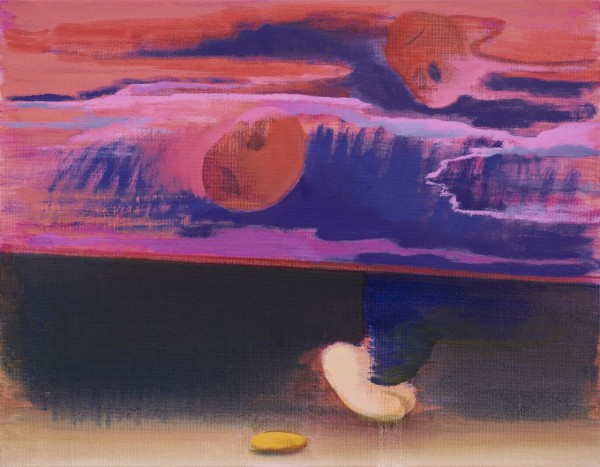
Song Seungeun, Light and Gentle Footsteps, 2025, oil on canvas, 31.8 × 40.9 cm