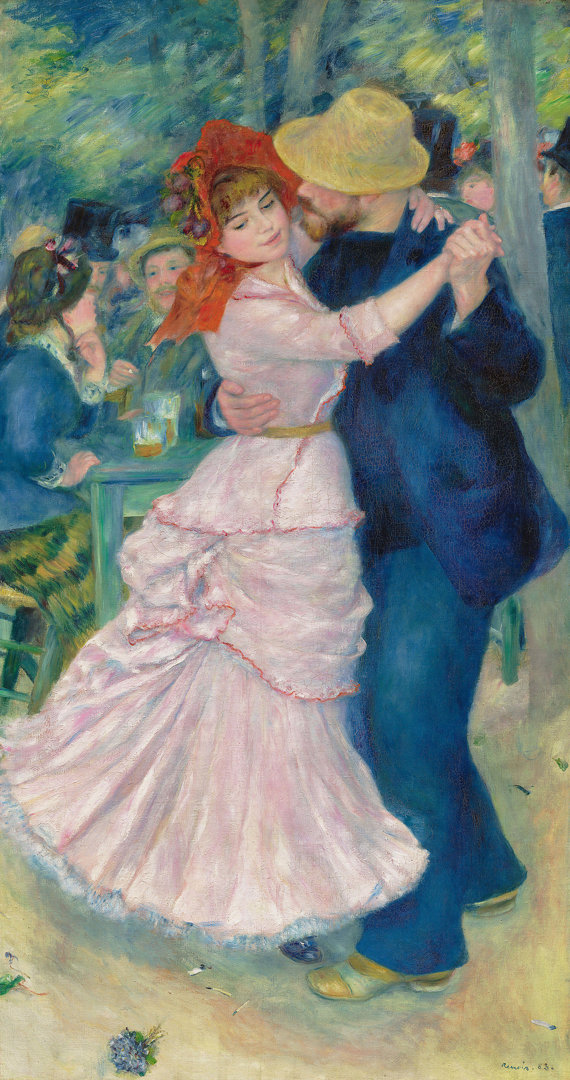
Image: Pierre-Auguste Renoir, 'Dance at Bougival', 1883, Museum of Fine Arts, Boston, Picture Fund, 37.375. Photograph © 2026 Museum of Fine Arts, Boston
This autumn, the National Gallery presents a major Impressionist exhibition dedicated to Pierre-Auguste Renoir, an artist celebrated for his singular ability to render human intimacy, warmth, and everyday joy.
Organized in partnership with the Musée d’Orsay and the Museum of Fine Arts, Boston, the landmark display features 40 masterpieces drawn from distinguished collections worldwide, offering a rare look at Renoir’s most innovative period between the 1860s and 1880s.
A central highlight of the exhibition is the UK debut of Dance at the Moulin de la Galette (1876), on loan from the Musée d’Orsay.
Painted when Renoir was 35, this monumental work presents an outdoor Montmartre dance hall filled with dapples of sunlight, dynamic brushwork, and familiar faces from his inner circle.
Renoir broke with academic tradition by devoting a large-scale canvas not to historical or mythological figures, but to a modern snapshot of everyday people celebrating life together.
Renoir’s work consistently placed friendship, love, and community at its center.
In his early masterpiece Mother Antony’s Tavern (1861)—on loan from the Nationalmuseum in Stockholm—a 25-year-old Renoir captures his impoverished, bohemian friends sharing a meal in Marlotte.
The narrative canvas features artists Jules Le Coeur and Alfred Sisley, alongside subtle details like a wall drawing honoring writer Henri Murger and a three-legged poodle named Toto resting under a chair.
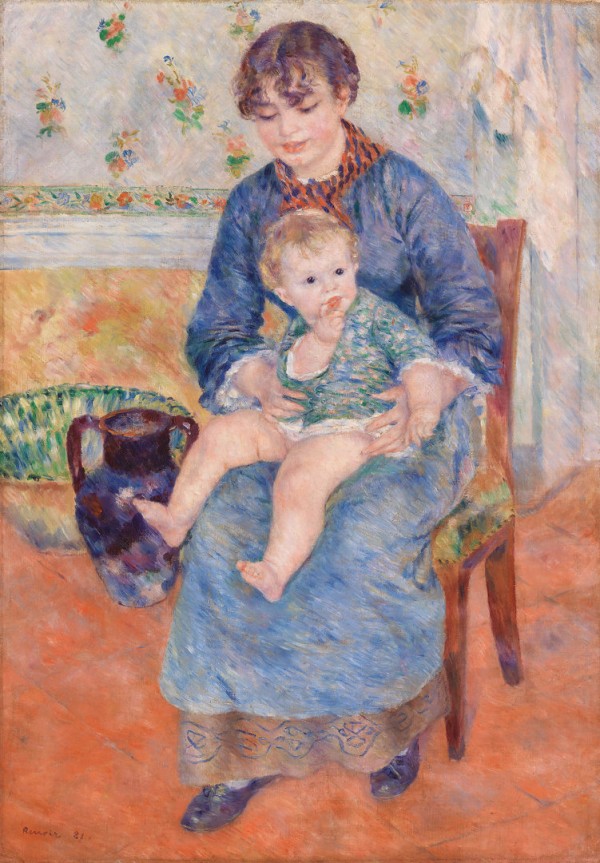
Image: Pierre-Auguste Renoir, 'Young Mother', 1881. The Barnes Foundation, Philadelphia, BF15. The Barnes Foundation, Public Domain
The exhibition also reunites two of Renoir's striking, life-sized depictions of social dance: Dance in the Country (1883) and Dance at Bougival (1883).
These vibrant works capture the thrill of romance and movement, featuring key figures in the artist's life, including his future wife, Aline Charigot, and fellow artist Suzanne Valadon.
Together, the paintings reflect Renoir’s fascination with youth, fashion, and physical connection.
Visitors can also experience the sunlit tranquility of Renoir’s riverside scenes along the Seine, such as Lunch at Restaurant Fournaise (The Rowers' Lunch) (1875) from the Art Institute of Chicago.
Through light-filled brushstrokes and shimmering reflections, the painting transports viewers to a relaxed afternoon in Chatou, capturing the rising culture of suburban leisure enabled by Paris's expanding railways.
Beyond his bustling group scenes, the exhibition highlights quieter, more contemplative moments.
In Young Mother (1881), on loan from the Barnes Foundation, Renoir presents a tender intimate scene painted during a transformative trip to Naples.
Influenced by Renaissance master Raphael, this work marks a subtle shift in Renoir’s artistic evolution away from pure Impressionism toward greater structural form.
By bringing together these celebrated masterpieces, the National Gallery offers a comprehensive journey through Renoir's revolutionary vision, showcasing an artist who forever transformed how we see affection, community, and human connection on canvas.
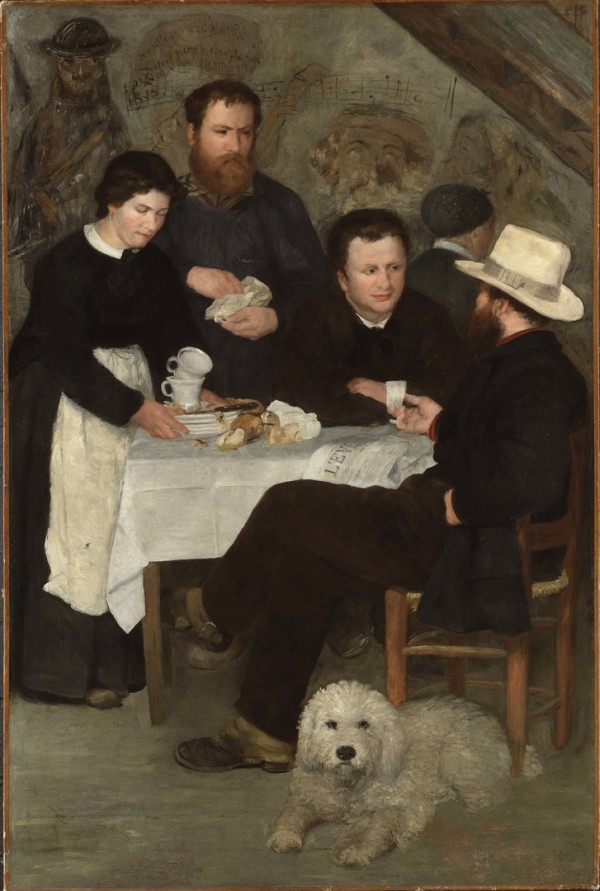
Image: Pierre-Auguste Renoir, 'Mother Antony's Tavern', 1866, Nationalmuseum, Stockholm. Gift 1926 Nationalmusei Vänner Photo: Nationalmuseum