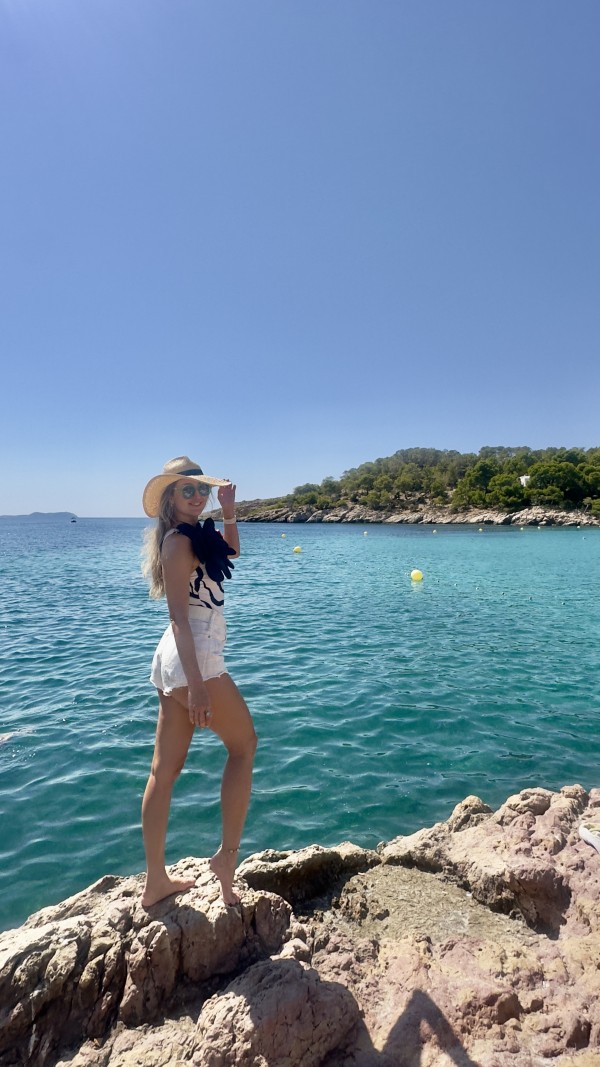
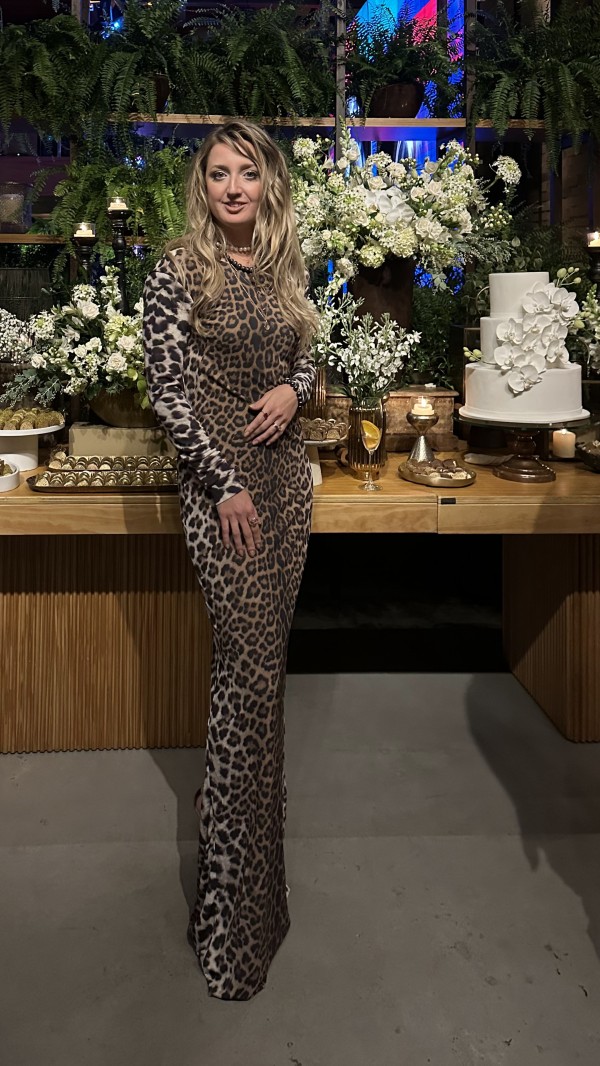
In a world increasingly defined by motion—migration, translation, reinvention—few poets embody the fluidity of modern identity as completely as the Russia-born, Brazil-based poet Irina Rudakova interviewed by media shovel.
Her work, shaped by the gravity of Russian winters and the radiant warmth of Brazilian streets, moves effortlessly across five languages and countless emotional landscapes.
She speaks of poetry not as a craft but as a condition of being—an operating system through which she processes love, exile, memory, and the shifting territories of the self.
Bridging cultures as easily as she bridges metaphors, she writes with a musicality that feels both ancient and immediate, introspective yet brimming with life.
Her poems, she says, “live on two continents at once,” drawing from Russian philosophical depth and Brazilian sensorial vibrancy to form a voice that is unmistakably her own.
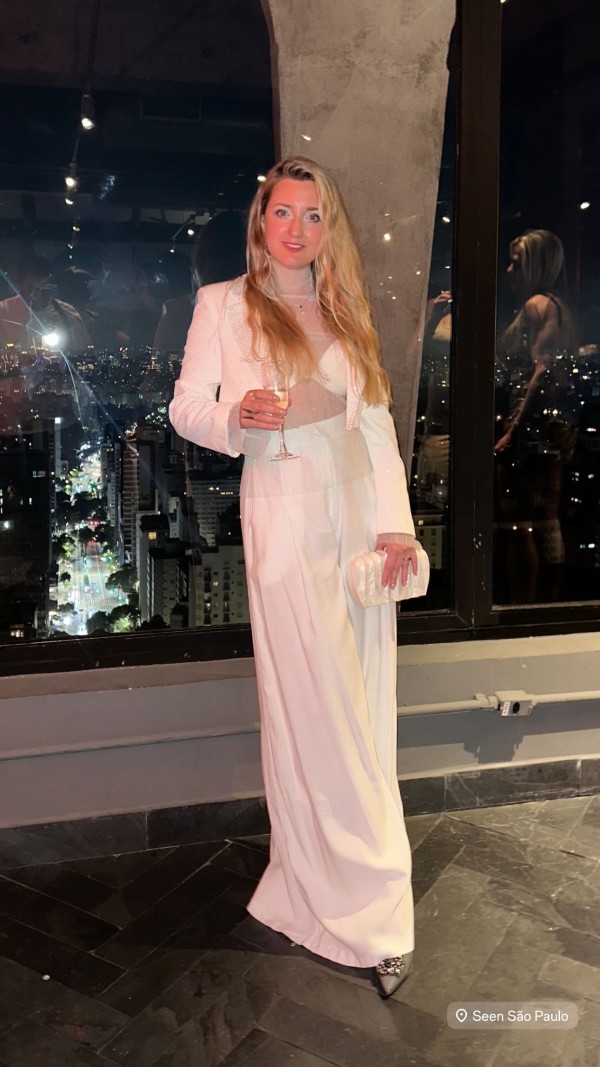
In this conversation, she reflects on the forces that shaped her—from the Moscow night that nudged her toward poetry, to the Brazilian winds that taught her to write with her whole body—offering a rare and intimate portrait of an artist who turns upheaval into lyricism, and transition into truth.
Q You were born in Russia but now live in Brazil. How have your experiences in both countries shaped your voice as a poet?
I often say that my voice lives on two continents at once.
Russia gave me depth and gravity: long winters, a culture where literature is almost a religion, and a language that can hold very fine shades of philosophy, unconditional love, and reflection.
Brazil gave me movement and warmth: light on the skin, music and vibes in the streets, and an emotional openness that invites you to feel things fully and out loud.
In Russia, I learned to look inward and to listen carefully to silence. In Brazil, I learned to dance with life, even when it is chaotic and unpredictable.
My poems stand somewhere between these two energies: they are introspective, but never static; emotional, but never careless. The contrast between Russian depth, greatness, discipline and Brazilian spontaneity is exactly what shapes my cadence, my imagery, and the way I speak about love, memory, philosophy, and change.
Q Can you describe the moment you realized poetry would be a central part of your life?
There wasn’t a single thunderbolt moment—more a series of quiet recognitions. I remember one specific evening, though. Around ten years ago, I was driving in Moscow at night, asking myself: “What should I do next?” At a traffic light I turned my head and saw an advertisement banner that said: “You can become a great poet.”
I smiled and thought: “Oh, yes. That’s what I’m going to do.” It felt like an answer from the city itself.
Later, when I moved to Brazil and went through big life transitions—new country, new language, new identity—it was poetry that helped me stay whole. Every time something deeply important happened, my first instinct was to write, not to explain. At some point I stopped fighting it and accepted that poetry isn’t a hobby for me; it’s the operating system through which I perceive and process reality.
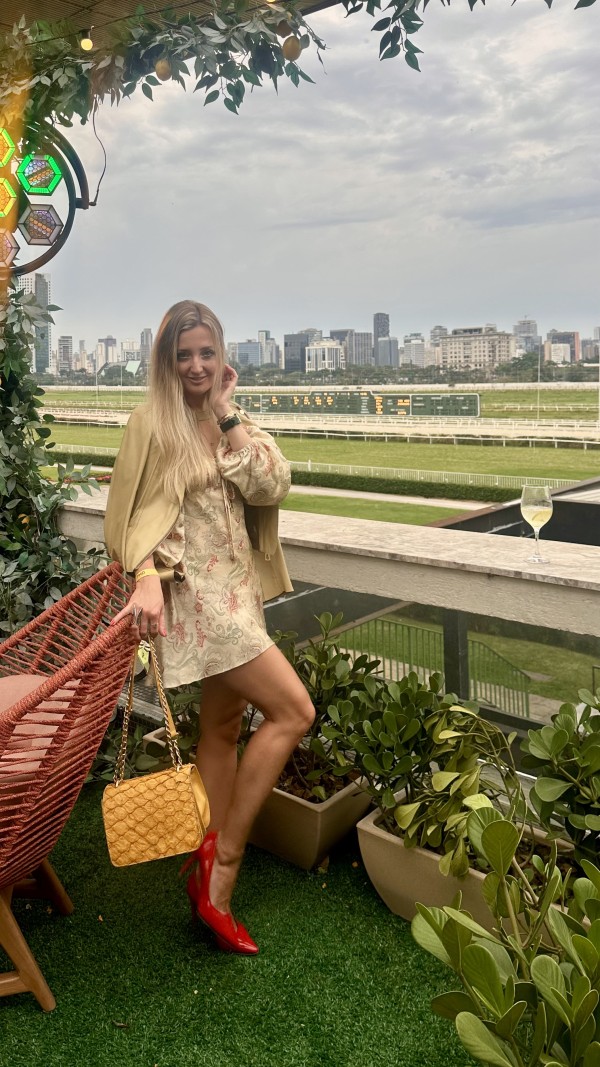
Q How does your Russian heritage inform your writing, even as you write in or about Brazil?
Russian culture has a long tradition of treating literature with seriousness, almost with reverence. That shaped me deeply. I grew up reading writers who allowed themselves to be brutally honest, vulnerable, and philosophically ambitious. That heritage gave me permission to ask big questions in my work—about love, fate, dreams, memory—without apologizing for the intensity.
Even when I write about Brazilian beaches, São Paulo spring, or a samba-like connection, there is a Russian lens present: the tendency to look for subtext, to search for what isn’t being said, to listen for the echo behind the words.
My sense of irony, my attraction to contradictions, and my love for complex, morally “grey” characters in my poems all come from that Russian background.
Q. Can you walk us through your typical writing process—do you follow a ritual, or does inspiration strike unexpectedly?
A bit of both. Inspiration is unpredictable, but my commitment to meeting it is quite disciplined.
Very often, a poem is born from one line that arrives together with the whole text, almost like someone whispered it into my ear or extracted it directly into my mind from the heart. I write it down immediately, wherever I am: in a café, in a taxi, at the airport. I use voice notes a lot—they help me capture the emotion in its original tone. I even have a poem on YouTube that uses the original voice memo exactly as it was recorded.
On the page, I try to be radically honest with myself, even if I’m not yet ready to be that honest out loud.
Later, I sit down and try to organize and refine the poems with discipline. Sometimes it works and I feel happy and satisfied; sometimes life gets in the way—after all, we are human and need to put effort into making things done. But poetry itself remains a mystery. It is born by itself; my role is to receive it and register it carefully.
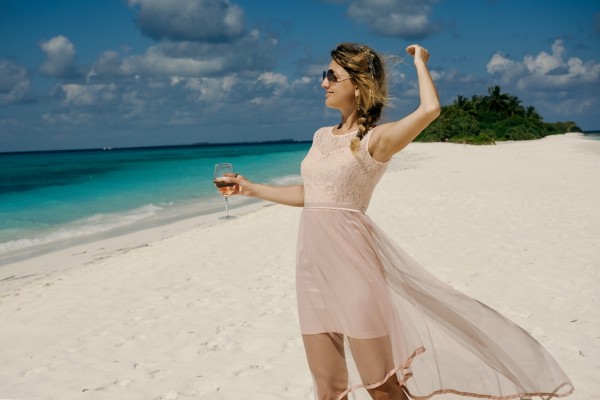
Q Nature, memory, and personal experience seem to appear frequently in your work. Which sources of inspiration are most central to your poetry today?
Today, my strongest sources of inspiration are:
Intimate relationships – not only romantic, but also family, friendships, and those brief but intense connections with strangers that stay with you. I love to dive deep into human souls.
Moments of transition – airports, border crossings, moving houses, ending or beginning chapters of life. These in-between spaces fascinate me. I love to travel, and it always brings me a sense of adventure that inspires me.
Small, almost invisible details – how someone holds a cup, the silence after a message is read but not answered, the way light falls on a worn-out table.
Nature – its beauty in every movement: waves, leaves, wings, paws… Nature often appears as a mirror: the ocean when I write about desire, the wind when I write about change, the night sky when I write about solitude.
Memory – for me, memory is not a museum; it is a living organism. It keeps editing itself, and I love to capture those edits and distortions in my poems.
Q. How do you approach the challenge of translating emotion and memory into words, particularly across different languages and cultures?
For me, translation—of both emotion and text—is less about perfect equivalence and more about emotional fidelity. I write in five languages, depending on how I feel and how the emotion “speaks” to me. Then I start choosing words, rhythm, and metaphors that can carry that sensation, even if they are not literal.
Different languages have different emotional temperatures.
Russian can be very dense and layered; it is the most expressive for me.
Portuguese can be incredibly musical and sensorial. English is often direct and precise, but still romantic. Italian is unique and theatrical; Spanish is hot and vivid. When I move a poem from one language to another, I allow it to slightly “reincarnate” in that new culture. I keep the soul of the poem intact, but I accept that the body will look a bit different.
Q Many readers note a sense of musicality and rhythm in your poems. How do you balance sound, structure, and meaning in your work?
I hear poems before I write them. I often test lines out loud, like tasting them. If the line doesn’t “sing” properly—if it stumbles in my mouth—I know I need to adjust the rhythm or the word choice.
Meaning is always the backbone, but sound is the nervous system.
I use repetition, internal rhyme, and pauses almost like a composer uses notes and silences. Sometimes I deliberately choose a harsher rhythm if the subject is uncomfortable; sometimes I let the lines flow longer and softer when the poem talks about love or surrender.
I don’t believe in sacrificing depth for cleverness or form. The structure must serve the feeling, not the other way around. When sound, structure, and meaning lock into place together, you feel it physically—that’s when I know the poem is finished.
Q What themes do you feel are most recurrent in your poetry, and why do they resonate with you?
The recurring themes in my work include:
Love and its many paradoxes – not just romantic love, but also self-love, spiritual love, and the tension between idealized and real relationships.
Belonging and exile – what it means to belong to more than one place and at the same time to feel slightly foreign everywhere.
Time and memory – how we rewrite our own history, what we choose to remember or forget, and how the past negotiates with the present.
Nature as a character – not just a background, but a living presence with its own moods and messages.
Motivation and emotional support – words as a way to hold someone’s hand at a distance and remind them of their own strength.
These themes resonate with me because they are the questions I live with every day.
I am a migrant, a woman, a poet, someone building a life between cultures and languages. Love, belonging, and memory are not abstract topics for me—they are the architecture of my everyday existence.
Q Do you consciously experiment with form, or do your structures emerge organically from the poem itself?
The structures mostly emerge organically. I rarely decide in advance, “This will be a sonnet” or “This will be prose poetry.” Instead, I listen to what the poem wants. Some emotions come in short, sharp lines; others need long, flowing sentences that almost forget where they started.
That said, I do enjoy gentle experimentation—playing with white space, breaking lines in unusual places, mixing narrative with lyrical fragments.
I see form as a living thing, not as a cage. When I experiment, it is never to show how “clever” I can be, but to find a shape that best holds the emotional truth of that specific piece.
Q Do you write primarily in Russian, Portuguese, or both? How does language choice affect your creative expression?
I write in Russian and Portuguese, as well as in English, Spanish, and Italian—it all depends on the context and the source of inspiration. The choice of language is never neutral; it changes the emotional color of the poem.
In Russian, I tend to go deeper into introspection, philosophy, and psychological nuance.
In Portuguese, my writing often becomes more sensual, more connected to the body, to the climate, to the senses. English, for me, is a bridge language—it helps me be precise and sometimes more minimalist.
Sometimes I start a poem in one language and finish it in another. It’s as if the feeling “chooses” which language can carry it best at that moment. Being multilingual is like having several musical instruments on which you can play the same melody, each with a slightly different timbre.
Q Have you translated your own work or been involved in translations? How does this process influence your understanding of your own poetry?
Yes, I often translate my own poems and have also collaborated with others translating them. Translating my own work is a humbling process—it forces me to confront what is essential and what is decorative.
When I translate, I see my poem from the outside for a moment, almost as if it belongs to another author.
I notice where I was hiding behind metaphors, where I was brave, and where I was cautious. Sometimes the translation reveals a deeper layer of meaning that I wasn’t fully aware of when I wrote the original.
Other times, I have to accept that a specific wordplay or cultural reference simply cannot be carried over—and then I need to reinvent instead of replicate.
Q How do you hope readers connect with your poetry? Are there specific emotions or thoughts you wish to evoke?
I don’t need readers to understand every biographical detail behind a poem. What I hope is that they recognize themselves in it somehow—that a line suddenly illuminates something they’ve felt but never had words for.
If I could choose, I’d like to evoke a combination of tenderness and courage: tenderness towards one’s own vulnerabilities and past mistakes, and courage to make conscious choices in love, in identity, and in the way we show up in the world.
I’m happy if a reader simply feels less alone after reading my work. If they close a poem and think, “So it’s not just me. Someone else has been here too,” then the poem has done its job.
Q What role do you believe poetry plays in contemporary society, particularly in bridging cultural or linguistic divides?
We live in a time of speed and overload. Poetry, by its nature, slows us down. It asks us to pay attention—to a word, a breath, a silence. In that slowing down, we can remember our shared humanity beyond politics, algorithms, and noise.
Because poetry compresses experience into concentrated language, it can cross borders very quickly. A short poem can travel from Russia to Brazil to anywhere in the world in seconds.

Even when the reader comes from a completely different culture, they can still feel the core emotion. In that sense, poetry is a kind of emotional diplomacy: it allows us to meet each other not as stereotypes or headlines, but as human beings who love, lose, fear, and hope in very similar ways.
Q Looking forward, what new directions or experiments in your work are you most excited to explore?
I’m excited to explore more hybrid forms—where poetry meets memoir, photography, and even audio or performance.
I’m interested in creating poetic “constellations”: not just individual poems, but interconnected pieces that readers can navigate almost like a map of a life.
I also want to work more intentionally with multilingualism: writing sequences that move between Russian, Portuguese, English, and other languages within the same project, reflecting the reality of my inner world. And finally, I’m drawn to exploring themes of mature love, aging, and legacy—what it means to build not just a life, but a story that continues after you.