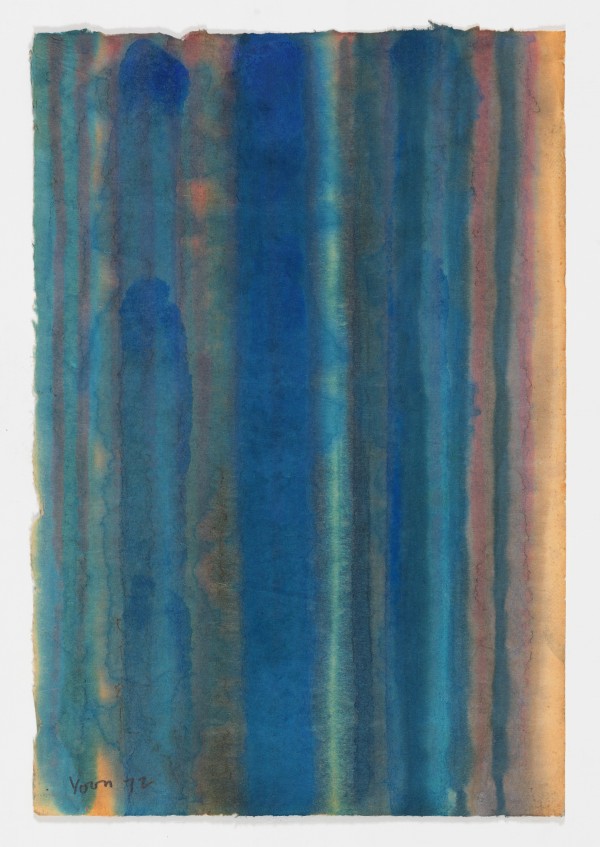
Yun Hyong-keun, Burnt Umber & Ultramarine, 1972, Oil on hanji, 49 × 33 cm. © Yun Seong-ryeol. Courtesy of PKM Gallery. (Burnt Umber & Ultramarine (1972) by Yun Hyong-keun is a compelling early example of the Korean Dansaekhwa master's signature aesthetic, executed in oil on traditional handmade Korean paper (hanji) and measuring 49 by 33 centimeters. In this intimate work, Yun blends his two iconic pigments—earthy burnt umber, representing the earth, and deep ultramarine, representing the ocean—allowing the oil to bleed naturally into the raw fibers of the hanji. The artwork is reproduced courtesy of PKM Gallery, with copyright held by Yun Seong-ryeol. )
The Estate of Yun Hyong-keun will open the long-awaited Yun Hyong-keun House to the public for the first time on September 1, 2026.
Located in Seogyo-dong, Seoul, the site serves as the former residence and studio where the master of Korean Dansaekhwa lived and created his work.
The house will welcome visitors for an initial limited engagement through October 17, 2026, before transitioning to a permanent seasonal opening schedule starting in the spring of 2027.
The property carries a rich artistic provenance, having originally been acquired as part of a public housing parcel in 1963 by Yun's father-in-law, Kim Whanki, a pioneer of Korean abstract art.
Yun moved to the location in 1967 and later demolished the original building in 1983 to construct a custom residence.
He commissioned his younger brother, Yun Do-Geun—then a professor of architectural design at Hongik University—to design the home, while actively shaping its spatial functions, form, and materials himself.
The structure balances Western modernist architecture, seen in its clean rectangular facade, terrace, and exposed studio ceilings, with a distinctly Korean aesthetic realized through wood-finished interiors and traditional wooden latticework.
The preservation and restoration process prioritized maintaining the original environment, keeping the architectural structure, furniture arrangements, and personal objects intact.
The first-floor studio, retaining the physical traces of Yun's creative process, now functions as a permanent exhibition space showcasing representative paintings from throughout his career.
Adjacent archive and video rooms present historical documents and media detailing his multifaceted life as an artist, husband, and father.
On the second floor, the domestic living spaces—including the living room, kitchen, and master bedroom—remain preserved just as the family left them.
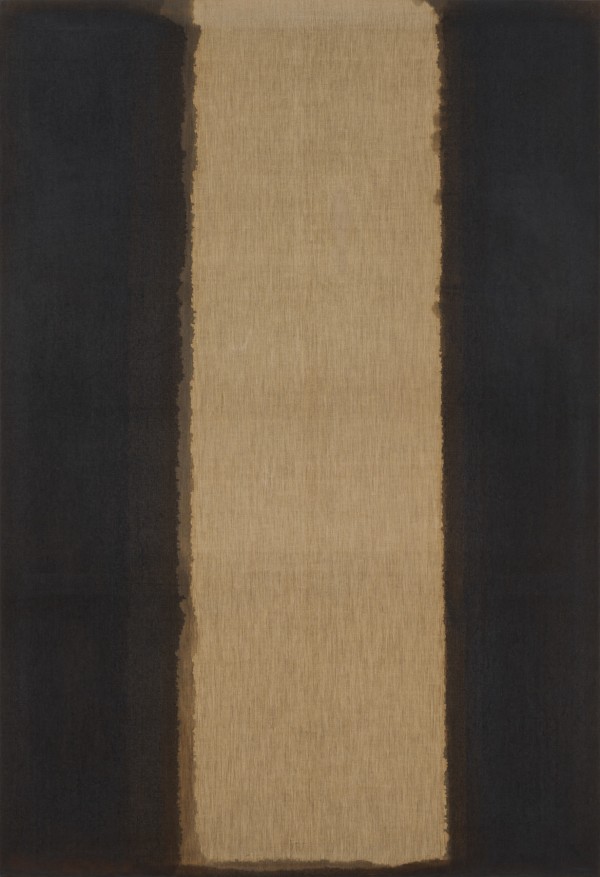
Yun Hyong-keun, Blue-Umber, 1979, Oil on linen, 220.5 × 150.2 cm. © Yun Seong-ryeol. Courtesy of PKM Gallery.
Antique furniture, historic ceramics, and personal items displayed alongside artworks reflect Yun's personal taste and everyday routines.
Reflecting his belief that art is merely a trace of life and that a truthful attitude matters more than the canvas itself, Yun Hyong-keun House offers visitors an intimate encounter with the living context behind his enduring artistic legacy.
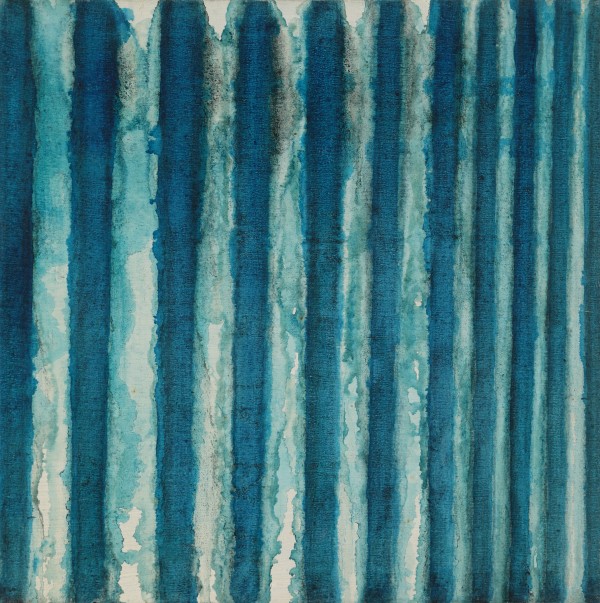
Yun Hyong-keun, Blue, 1972, Oil on canvas, 70 × 69.7 cm. © Yun Seong-ryeol. Courtesy of PKM Gallery.